Investigate from five seats
Move among five leadership roles with distinct briefings and authority. Visit departments and question fictional colleagues; each seat has limited attention each day.
Step inside an authored manufacturing company for five consequential days. Interview fictional colleagues, share evidence across leadership roles, and authorize responses whose costs and consequences carry into the next day.
Drag to orbit the fictional company and scroll to zoom. This preview is anonymous and read-only: it does not sign anyone in, save a decision, or connect to a company account.
Move through the company, hear from the people closest to the work, and inspect the evidence behind competing needs. The same physical world shows how a decision in one area affects another.
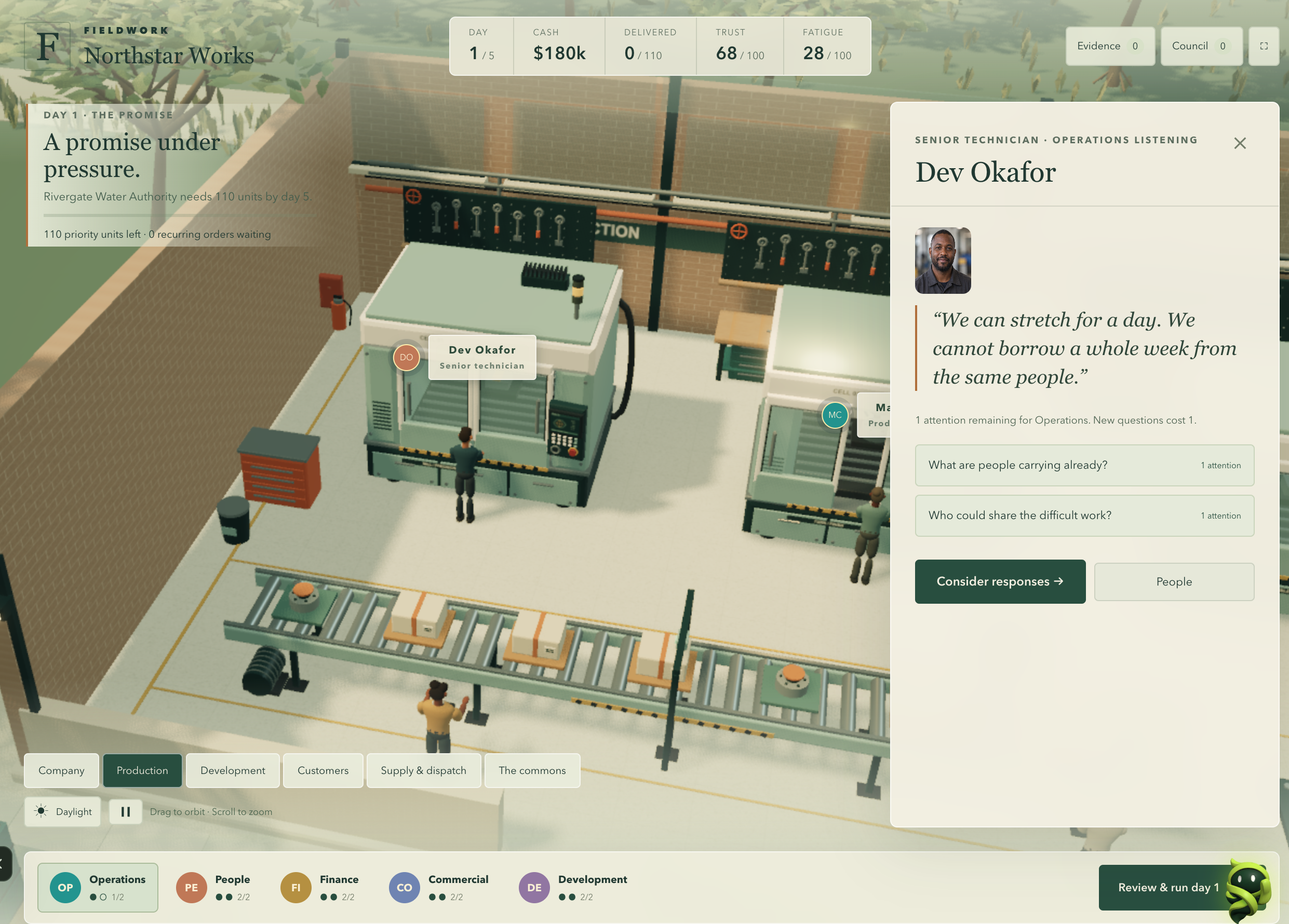
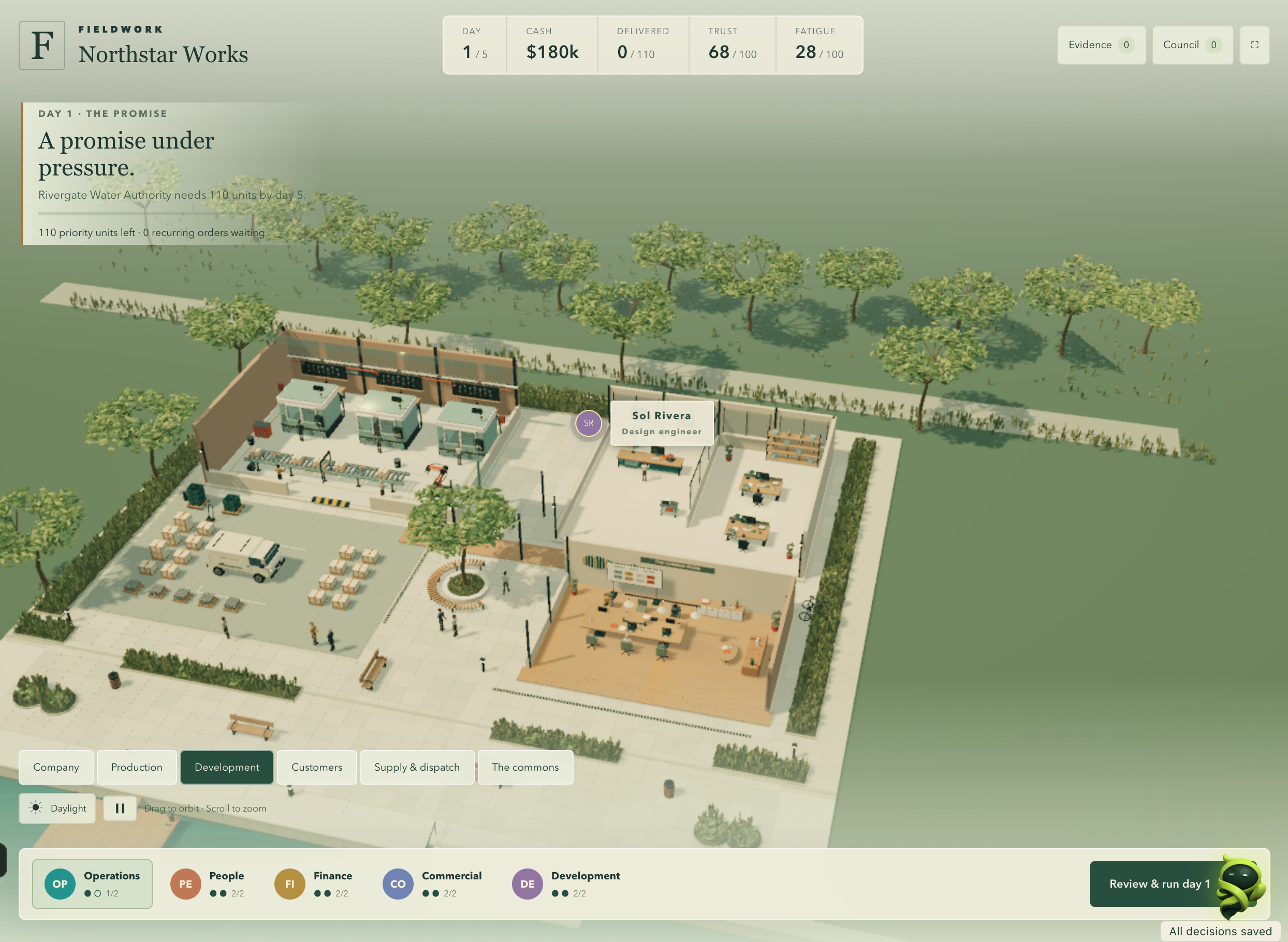
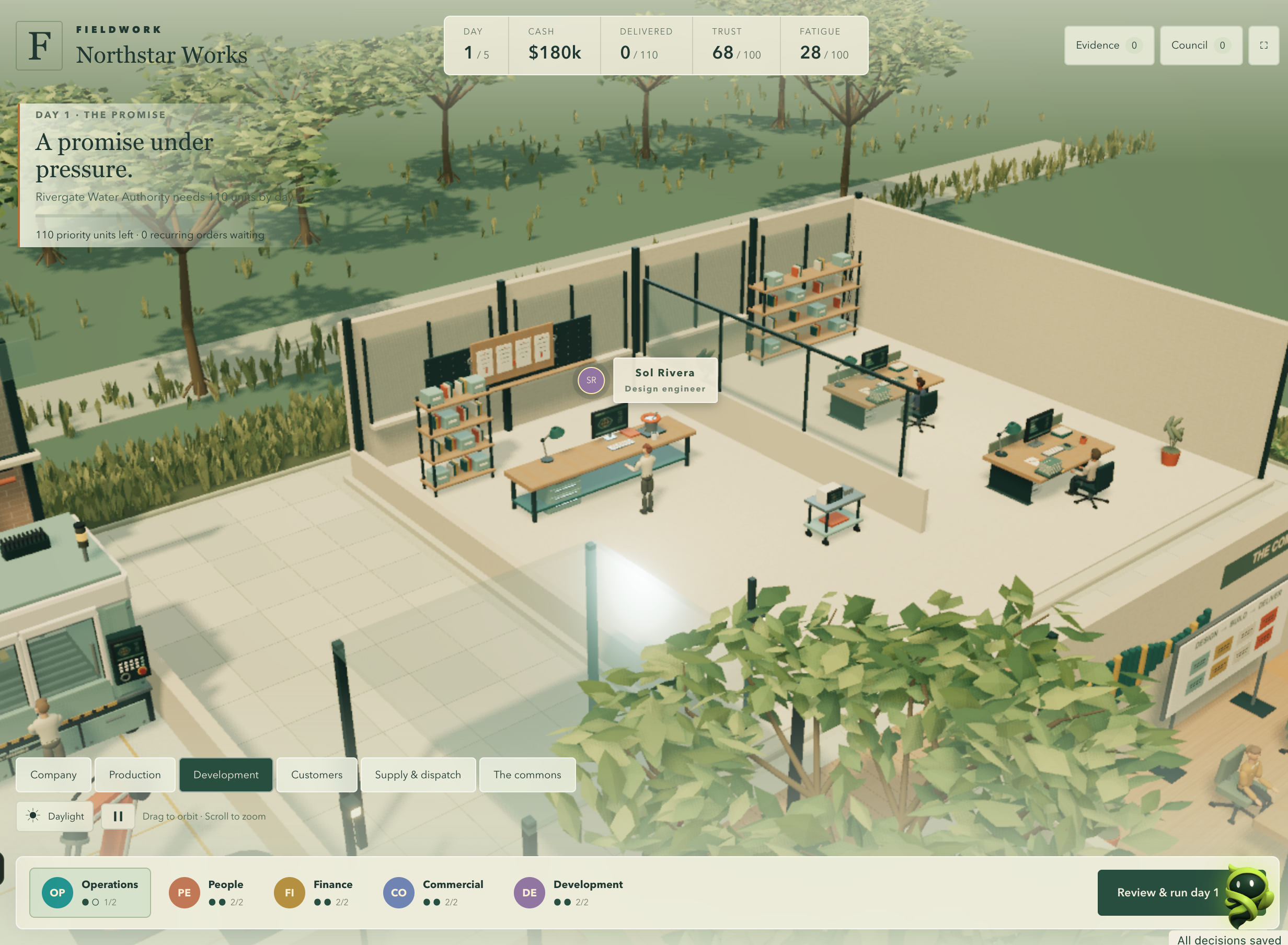
Move among five leadership roles with distinct briefings and authority. Visit departments and question fictional colleagues; each seat has limited attention each day.
Some interventions need a shared factual basis. Gather what colleagues know, propose a response from an authorized seat, and collect the required approvals before committing it.
Time advances when the player chooses “Review & run day.” Production, orders, cash, fatigue, quality, and delayed work respond to the choices already made.
A person can start private practice, or HR can issue an assigned run. Accepted decisions save to the Zipplee account, so the player can leave and resume.
Start with the fictional example or use a reviewed company profile. A profile can adjust company names and starting economics; the manufacturing chapter and its decision mechanics remain authored.
The final debrief shows outcomes, tradeoffs, and commitments. For assigned runs, authorized HR can review the saved decision history and what evidence was known. Fieldwork provides no candidate rank or validated hiring score.
A player controls the pace. There is no reflex timer.
Visit a department, talk with its people, and use limited attention to investigate the evidence that matters.
Share findings across leadership seats, propose an intervention, and authorize it from the seats whose approval it needs.
Choose “Review & run day” when ready. Study the new conditions, continue through day five, then read the debrief and saved decision history.
Use the saved decision history and debrief to ask what someone noticed, which evidence they shared, why they authorized a response, and how they balanced its effects on people and the business. HR retains the human judgment.